

How to Spot Fake Streetwear: A Buyer's Guide
Table of Contents
- Why Spotting Fake Streetwear Matters
- Visual Signs of Counterfeit Clothing
- Fake Streetwear Tags and Labels
- Streetwear Quality Details to Inspect
- How to Spot a Fake Clothing Website
- Your Step-by-Step Streetwear Authentication Checklist
- What to Do If You Suspect a Counterfeit Purchase
- Frequently Asked Questions
Last Updated: October 21, 2026
Why Spotting Fake Streetwear Matters
Counterfeit clothing has become a massive problem in streetwear communities. When you're shopping for premium cannabis-themed apparel or any collectible streetwear, you need to know how to spot a fake before your money disappears.
The stakes are real. You lose cash on a bad purchase. You might wear counterfeit gear to a concert or social gathering and have someone call you out.
Learning to spot fake streetwear takes practice, but the skills are straightforward. This guide walks you through every detail you need to inspect.
Visual Signs of Counterfeit Clothing
The easiest fakes fail on basic visual inspection. Counterfeit clothing often shows obvious flaws that authentic pieces never have.
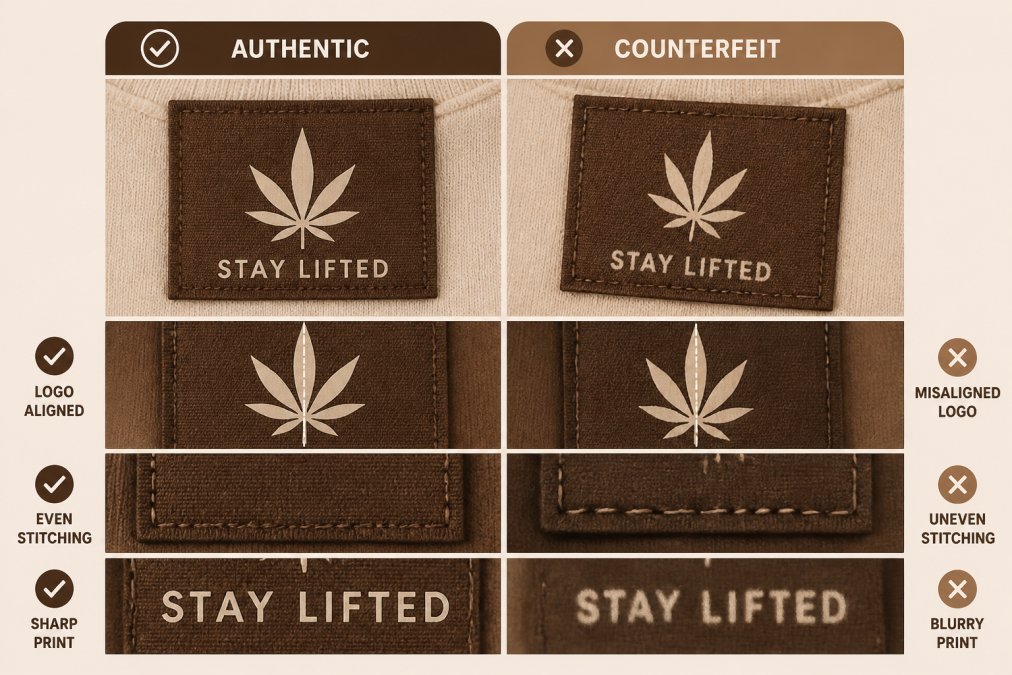
Most counterfeits cut corners on quality control. The designers behind real streetwear obsess over every detail. Fake manufacturers rush production and skip inspections.
Logo Accuracy, Placement, and Proportions
Logos are the first thing to examine. Authentic logos have precise proportions, clean edges, and correct placement on the garment. Fake streetwear tags and labels often show sloppy logo work.
Check these specific details:
- Logo size: Does it match the authentic version exactly? Counterfeit logos are often oversized or undersized.
- Placement: Is the logo centered correctly? Fakes frequently have logos that sit too high, too low, or off to one side.
- Font accuracy: Are the letters the right thickness and spacing? Fake logos often use incorrect fonts with wrong letter spacing.
- Edges and clarity: Authentic logos have sharp, clean edges. Counterfeit logos appear blurry, pixelated, or fuzzy.
When you spot fake streetwear, the logo is usually where the problem starts. Take your time comparing the suspicious piece to verified authentic images from the official brand website.
Stitching Quality and Construction
Stitching tells you everything about whether you're holding authentic gear or a counterfeit piece. Real streetwear features tight, even stitching with consistent tension throughout. Fake streetwear shows loose threads, uneven stitching, and poor construction quality.
Look for these construction red flags:
- Uneven stitch lines: Authentic stitching follows straight paths with uniform spacing. Counterfeit stitching wanders, dips, or skips.
- Loose threads: Real brands trim loose threads. Fakes leave them hanging.
- Stitch tension: Authentic pieces have tight, secure stitches. Fakes have loose, sloppy stitching that could unravel.
- Seam placement: Quality pieces have seams in the right places. Counterfeits often misalign seams or skip them entirely.
Run your finger along the seams. Feel the stitching. Quality construction feels solid and secure. Poor stitching feels flimsy and ready to fall apart.
Fabric Quality, Texture, and Weight
The fabric tells a huge story. Authentic streetwear uses quality materials that feel substantial and durable. Fake streetwear uses cheap fabric that feels thin, plasticky, or rough.
When you examine the fabric, pay attention to:
- Weight and thickness: Hold the piece in your hands. Does it feel substantial? Authentic streetwear has real weight. Counterfeits feel light and flimsy.
- Texture: Run your hand across the fabric. Real streetwear feels smooth or has a consistent texture. Fakes often feel rough, plasticky, or uneven.
- Stretch and recovery: Does the fabric bounce back when you stretch it? Quality material recovers quickly. Cheap counterfeit fabric stays stretched out.
- Print quality on fabric: Does the print feel smooth or does it crack and peel? Authentic prints bond with the fabric. Fake prints sit on top and flake off.
Rub the fabric between your fingers. Quality material feels good. Cheap material feels like it'll fall apart after two washes.
Color Consistency and Print Quality
Color inconsistencies scream counterfeit. Authentic streetwear maintains consistent color throughout the piece and across multiple units. Fake streetwear often shows color variations, faded spots, or uneven dye jobs.
Examine the color and print carefully:
- Uniform color: Is the color even across the entire piece? Fakes often have lighter or darker patches.
- Print clarity: Is the design sharp and clear? Counterfeit prints look blurry, pixelated, or smudged.
- Color bleeding: Do the colors stay in their designated areas? Fake prints bleed into surrounding fabric.
- Fading patterns: Does the piece fade naturally or show strange fading? Counterfeits often fade unevenly or show water stains.
Hold the piece up to light. Look at the print from different angles. Real prints maintain clarity and color saturation. Fake prints look cheap and worn even when new.
Fake Streetwear Tags and Labels
Tags and labels reveal whether you're looking at authentic gear or a counterfeit piece. Real manufacturers include detailed, accurate tags with proper fonts, spacing, and information. Fakes cut corners on tags because most buyers don't examine them closely.
Inspect the care label and brand tags thoroughly:
- Font accuracy: Does the text use the correct font? Counterfeits often use wrong fonts that look slightly off.
- Label placement: Is the label sewn in the correct location? Fakes often place labels in wrong spots or use cheap glue instead of stitching.
- Stitching on labels: Are the labels stitched securely? Real brands stitch labels with reinforced stitching. Fakes glue them or use weak stitching.
- Text clarity: Are all letters and numbers clear and legible? Fake labels often have blurry or misaligned text.
Look at the back neck label first. This is where most brands put their main label. Authentic labels feel substantial and are stitched securely. Fake labels feel cheap and might peel away.
Streetwear Quality Details to Inspect
Beyond the obvious signs, real streetwear includes quality details that counterfeiters skip. These small touches separate premium pieces from fakes.
Packaging and Included Accessories
How the piece arrives matters. Authentic streetwear comes in quality packaging with proper branding and included accessories. Counterfeit clothing arrives in generic packaging with missing items.
Check what comes in the box:
- Packaging quality: Does the package feel substantial? Real brands use quality boxes or bags. Fakes use cheap plastic or thin cardboard.
- Branded packaging: Is the packaging branded correctly? Authentic packages show the brand logo and information. Fakes use generic packaging.
- Included items: Does the package include care cards, extra buttons, or other accessories? Real brands include these. Fakes skip them.
- Documentation: Is there any documentation or authenticity cards? Some premium brands include certificates or hang tags. Fakes rarely include these.
When your order arrives, examine the packaging immediately. Quality packaging signals quality inside. Generic packaging suggests you've received a counterfeit piece.
Price and Unusually Large Discounts
Price is a huge red flag. If the deal seems too good to be true, it probably is. Authentic streetwear maintains value. Counterfeit clothing gets sold at rock-bottom prices.
Be suspicious of these pricing situations:
- Prices far below retail: Is the price 50% or more below the original retail price? Real pieces rarely drop that low unless they're clearance items from official channels.
- Bulk discounts: Are you getting multiple pieces for suspiciously low prices? Fakes get sold in bundles at cheap rates.
- New pieces at old prices: Is a new design selling for way less than similar pieces? Counterfeits undercut authentic prices dramatically.
- Seasonal inconsistency: Is summer gear being sold at winter prices? Real retailers adjust inventory, not prices this drastically.
Compare the price to verified retailers. If it's significantly cheaper, dig deeper into the other authentication signs. A great deal on a fake is still a bad deal.
How to Spot a Fake Clothing Website
Where you buy matters as much as what you're buying. Fake streetwear often comes from suspicious websites with poor design, missing information, and sketchy practices.
Evaluate the seller's website carefully:
- Professional design: Does the site look professionally made? Fake websites often have poor design, broken links, or outdated layouts.
- Contact information: Can you find a real address, phone number, and email? Legitimate businesses provide contact details. Fakes hide them.
- Return policy: Is there a clear, generous return policy? Real retailers stand behind their products. Fakes have no returns or impossible return conditions.
- SSL certificate: Does the URL start with "https://"? Secure websites encrypt your data. Fakes often use unsecured connections.
Visit the website from a desktop computer. Look around carefully. Real businesses invest in their online presence. Fake operations look cheap and hastily thrown together.
Your Step-by-Step Streetwear Authentication Checklist
Use this checklist every time you buy streetwear. Run through each item before you hand over your money. This systematic approach catches most counterfeits.
Before You Buy:
- Compare the logo to official brand images (size, placement, font, clarity)
- Examine the stitching (even lines, tight tension, no loose threads)
- Feel the fabric (substantial weight, smooth texture, proper recovery)
- Check color consistency (uniform throughout, no fading or bleeding)
- Inspect tags and labels (correct font, secure stitching, quality material)
Red Flags That Stop the Purchase:
- Logo appears blurry, pixelated, or incorrectly sized
- Stitching is uneven, loose, or falling apart
- Fabric feels thin, plasticky, or cheap
- Colors are inconsistent or prints are blurry
- Labels are glued instead of stitched or use wrong fonts
Go through this checklist methodically. One red flag doesn't always mean counterfeit, but multiple flags definitely do. When in doubt, walk away.
What to Do If You Suspect a Counterfeit Purchase
If you've already bought something and suspect it's counterfeit, take action immediately. Document everything and contact the seller or platform.
Here's what to do:
Step 1: Document the Evidence
- Take clear photos of the logo, stitching, labels, and overall piece
- Photograph any packaging or documentation that came with it
- Save all receipts, emails, and transaction records
- Write down specific details about what looks wrong
Step 2: Contact the Seller
- Send a polite message explaining your concerns
- Include your photos and specific details about the issues
- Request a refund or replacement
- Keep copies of all communication
Step 3: Use Marketplace Protection
- If you bought through an online marketplace, file a dispute through their system
- Most platforms have buyer protection programs for counterfeit items
- Provide your documentation and photos
- Request a full refund
Step 4: Report the Seller
- Report the seller to the marketplace platform
- If the seller is operating a website, report them to the platform's abuse team
- Consider reporting to the brand's official channels
- Leave an honest review warning other buyers
Step 5: Protect Yourself Going Forward
- Only buy from official brand websites or authorized retailers
- Use verified resale platforms with authentication services
- Check seller ratings and reviews before buying
- Trust your instincts about quality and pricing
Most legitimate sellers handle counterfeit complaints professionally. If the seller refuses to help or becomes hostile, that's another red flag that you've found a fake operation.
Spotting fake streetwear protects your wallet and your reputation in the community. At Good Shizz, we stand behind our premium quality and authentic designs because we know what real craftsmanship looks like. When you wear authentic streetwear, you're wearing something built to last and worth the investment. Discover the Collection
Frequently Asked Questions
How can you tell if streetwear is fake?
Start by examining the logo for accuracy in placement, proportions, and font. Check stitching for loose threads and uneven seams. Feel the fabric weight and texture, authentic streetwear uses quality materials that feel substantial. Inspect care labels for spelling errors or poor printing. Compare product photos to the listing details, and verify seller reputation on the marketplace. Counterfeit pieces often show multiple red flags across these areas simultaneously.
What details should you check when authenticating streetwear?
Use a streetwear authentication checklist covering logos (placement, proportions, color), stitching (evenness, thread quality), fabric (weight, texture, consistency), tags and labels (spelling, printing clarity, placement), packaging (quality of box or bag), and accessories (included items). Compare the item against official product photos from the brand's verified sources. Check the seller's reputation, return policy, and how long they've been active. Authentic pieces rarely have errors across multiple categories.
Are low prices a sign that streetwear is counterfeit?
Unusually large discounts, especially on new or limited-edition pieces, warrant caution. Authentic streetwear rarely drops 50% or more immediately after release. However, legitimate sales do happen on resale platforms and during seasonal clearance. Low price alone isn't proof of counterfeiting, but combine it with other red flags like poor stitching, inaccurate logos, or suspicious seller details. Always inspect the item itself regardless of price.
How do you check streetwear tags and labels for authenticity?
Examine care labels for spelling errors, misaligned text, or blurry printing. Authentic tags use clear, professional fonts and proper grammar. Check that the label placement matches official product images. Look for consistent font weight and color. Counterfeit labels often have loose threads around the edges, incorrect sizing information, or fonts that don't match the brand's standard. Verify the tag material feels durable and the stitching holding it in place is even.